
Kazakhstan Climbs 28 Places in Global Tourism Ranking
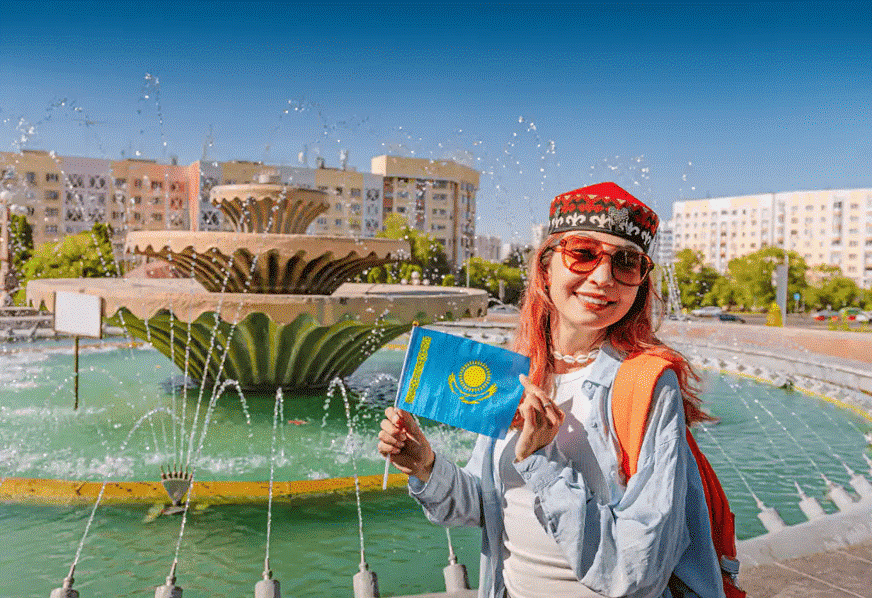
Kazakhstan continues to strengthen its position on the regional tourism map. In recent years, the sector has demonstrated steady growth, with tourism activity increasing across nearly all key indicators. Following strong growth in 2025, the positive trend has continued into 2026.
According to the latest data, nearly 2 million guests were accommodated at tourism establishments across Kazakhstan during the first quarter of 2026. The value of services provided exceeded 69 billion tenge, representing a 14% increase compared to the same period last year. The volume index of tourism services reached 104.5%, indicating not only higher prices but also genuine growth in tourism activity.
Domestic tourism has shown particularly strong momentum. During the first quarter of 2026, the number of Kazakh citizens using accommodation services within the country increased by 3.6%. This reflects growing interest among residents in travelling within Kazakhstan and points to ongoing improvements in tourism infrastructure, a broader range of services, and the increasing attractiveness of domestic destinations. As a result, domestic tourism is becoming one of the key drivers of the sector, stimulating regional economic activity, creating jobs, and supporting the growth of small and medium-sized businesses.
At the regional level, Almaty remained the leading destination, welcoming 472,900 visitors during January–March 2026. It was followed by Astana with 352,200 visitors and the Akmola Region with 161,100 visitors. Approximately 40% of all visitors were concentrated in resort areas, amounting to more than 800,000 people, highlighting the growing importance of recreational tourism and strong demand for domestic holiday destinations.
The positive trends are consistent with the priorities outlined by President Kassym-Jomart Tokayev, who has repeatedly emphasised the importance of tourism development, including in his 2025 State of the Nation Address, where he highlighted the Almaty tourism cluster and the strategic significance of the sector.
Tourism infrastructure continues to expand. Kazakhstan now has more than 4,500 accommodation facilities, employing around 31,000 people. Three years ago, the country had approximately 3,800 accommodation facilities and 28,000 employees in the sector. This represents growth of 17% in accommodation capacity and 12% in employment, underscoring the sector’s increasing contribution to the national economy.
Tourism’s contribution to Kazakhstan’s economy continues to grow. In 2025, the sector generated 5 trillion tenge and accounted for 3.1% of GDP. More than 600,000 people are now employed in tourism-related activities, representing around 7% of total national employment. According to Tourism and Sports Minister Yerbol Myrzabossynov, foreign visitors spent US$2.9 billion in Kazakhstan in 2025, while tax revenues generated by tourism increased by 18% to 630 billion tenge, raising the sector’s share of total tax revenues to 2%.
These results reflect sustained efforts by both the government and private sector to develop tourism infrastructure, improve transport connectivity, enhance service quality, and promote Kazakhstan internationally. Investment in the tourism sector reached 1.3 trillion tenge in 2025, up 33% year-on-year. At the same time, government spending on culture, sport, tourism, and information policy reached a record 1.2 trillion tenge.
Legislative reforms have also been introduced. Amendments adopted in March 2026 include a “green corridor” mechanism for tourist buses to reduce border crossing times for organised groups, the formal recognition of visitor centres, and the introduction of unified standards for guides, tour leaders, and tourism instructors. Additional measures support children’s and eco-tourism, including free access to national parks for visitors under the age of 18.
The development of the tourism sector is being guided by Kazakhstan’s Tourism Industry Development Concept for 2023–2029. A key objective remains attracting more international visitors through visa liberalisation, expanded international air connectivity, and stronger promotion of Kazakhstan abroad. Citizens of 84 countries can currently enter Kazakhstan visa-free, while an electronic visa system is available to citizens of 102 countries. Kazakhstan is connected to 30 countries through 626 weekly flights operating across 135 international routes.
Infrastructure development also continues at pace. In 2025 alone, 96 tourism infrastructure projects worth 167.4 billion tenge were implemented, while government support measures for the sector totalled approximately 7 billion tenge. These figures demonstrate that tourism has become one of the priority sectors of Kazakhstan’s economic policy.
The sector’s progress is increasingly reflected in international rankings. One of the most important benchmarks is the Travel & Tourism Development Index published by the World Economic Forum, which assesses tourism infrastructure, investment attractiveness, and readiness for sustainable tourism development. Kazakhstan ranked 80th in 2019 with a score of 3.7, improved to 66th in 2021, and reached 52nd place in 2024 with a score of 4.1. Overall, Kazakhstan climbed 28 places in just five years, representing one of the most significant improvements in the region.
The country has also improved its standing in the tourism and culture category of rankings published by U.S. News & World Report. Kazakhstan ranked 73rd in 2025, improving by 11 places over three years. Notably, Kazakhstan has narrowed the gap with regional competitors and now ranks seven places ahead of Uzbekistan, while also outperforming countries such as Qatar, Bahrain, Tunisia, and Vietnam.
Overall, international rankings confirm that Kazakhstan’s tourism sector is not only expanding quantitatively but also strengthening its competitiveness globally. Improvements in international indices reflect broader progress in infrastructure, service quality, investment attractiveness, and tourism promotion, reinforcing Kazakhstan’s emergence as one of the most promising tourism destinations in Central Asia.
Disclaimer: The views, suggestions, and opinions expressed here are the sole responsibility of the experts. No Prime Report Hub journalist was involved in the writing and production of this article.